
Cremation urns are a big part of the memorialization effort for any family of a deceased person. But, for those who do not make their livelihood in the death care industry, cremation urns can be a bit of a mystery and choosing the right own for a friend or relative who has passed away can be a challenge. It is for this reason that many people (and entire families) have taken to the tradition of picking out, and buying, their cremation urns even years before their own death. This practice can be a comfort to those left behind to organize a memorial service after a person has died, but it is still not a universal tradition. So, to help those faced with choosing a cremation urn in a relatively short period before a funeral service, we have assembled the following facts about cremation urns.
First Rule of Thumb
It may be comforting for families to know that they do not necessarily have to feel rushed into making a decision about a cremation urn for a loved one who has passed away. It is quite common, in fact, for families to accept cremation ashes in a temporary container that is usually suitable for display in a home or even at a funeral ceremony, and the ashes can then be transferred to a permanent cremation urn later. Families who are still deciding on arrangements may also benefit from learning more about Direct Cremation: Costs, Process, and More before selecting an urn. (In some cases, of course, the ashes are never transferred, or are transferred years after a death. This is perfectly acceptable.) Further still, it is common – and quite acceptable – for a family to transfer ashes into even a second cremation urn after the original urn is purchased and filled with the ashes from the temporary container. There is no limit to the number of times a person’s cremation ashes can be transferred to a different home. So, contrary to what may seem to be the case at first impression, there is rarely a real need for any family to rush into a decision about a cremation urn.
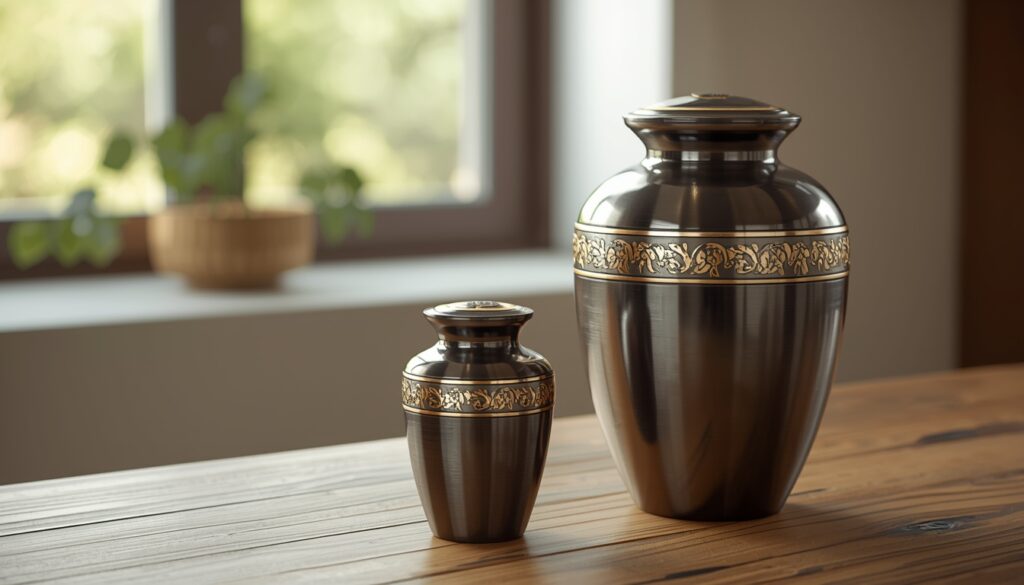
Types of Cremation Urns
Cremation urns are available in a wide variety of, potentially confusing, types, and the terminology used for the various types is worth explaining here.
First there are regular, or individual sized, cremation urns. These are the most common type and are intended to hold the ashes for a single individual.
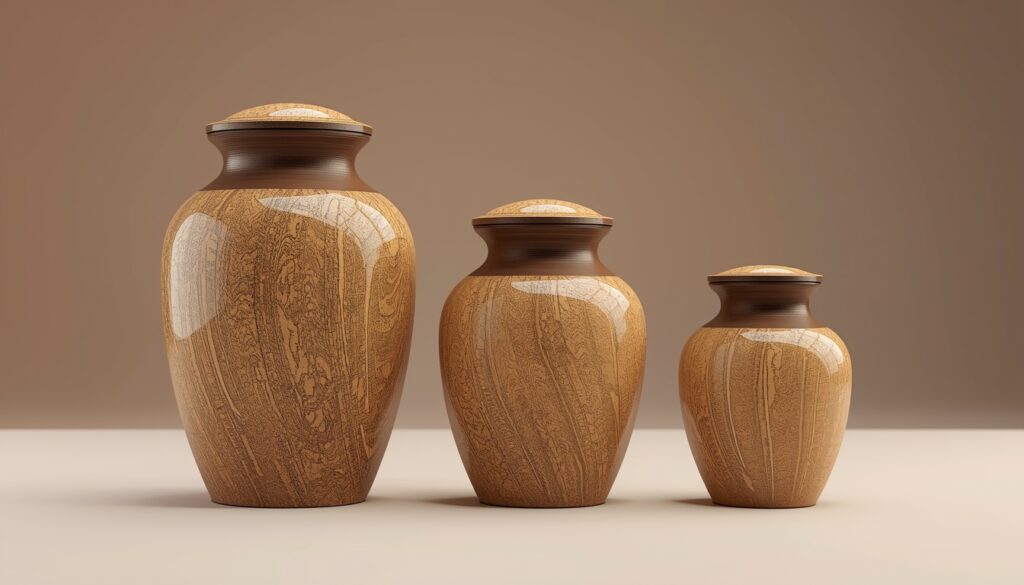
Then there are companion cremation urns which, as the name suggests, are intended to store the ashes of more than one person (usually just two, as in a married couple). These urns are usually available in two varieties, one variety consists of a single compartment in which the ashes of two people can be combined. And another variety consists of two separate compartment in which ashes of two people can be stored separately, but within the same overall urn. It is often the case that companion cremation urns have removable separators so that the urn can be used as either a single or double compartment urn, depending upon the desires of the deceased.
And, finally, there are keepsake cremation urns, which are urns that are smaller than the other two types and are intended to store just a small portion of the ashes. It is often the case that families will buy several keepsake cremation urns so that various members can take small portions to their own homes to store them separately. This is a cremation urn feature that is often used, especially in cases in which a family is far flung across a wide geographic region. With keepsake urns, families can share a loved one’s cremation ashes despite living great distances from one another.
Materials of Cremation Urns
Cremation urns are made of a huge variety of materials. From bronze to steel to clay to wood, just about anything that can be molded into a work of art can also be made into a cremation urn. Most retailers and websites that sell cremation urns have their selection listed according to the material used to make the urns, so, before selecting an urn for your family’s memorial needs, it is advisable to make sure you look through all the categories of urns that are available.
One of the most interesting, and popular, manufacturing method of cremation urns is the Cloisonne approach. This ancient art form involves creating a wire molding and then covering it with clay. So, for these urns, the material can be said to be both metal and ceramic. This may be the only type of cremation urn that can be said to be made of two different types of materials. In most cases, all other urns are made, uniformly of a single material. One note about Cloisonné urns (or any work of art made according to the Cloisonné method): getting it onto a commercial airline might be tricky. Airport security personnel are never allowed to touch the contents of an urn a passenger says contains cremation remains, but they typically do run such urns through a metal detector or an x-ray machine. The metal wire skeleton of any Cloisonne work may sometimes create a problem for security. With other works of art, officers might simply inspect the inside by hand. But, with cremation urns, that would be impossible under security policies for most airports and airlines.
How Cremation Urns are Used
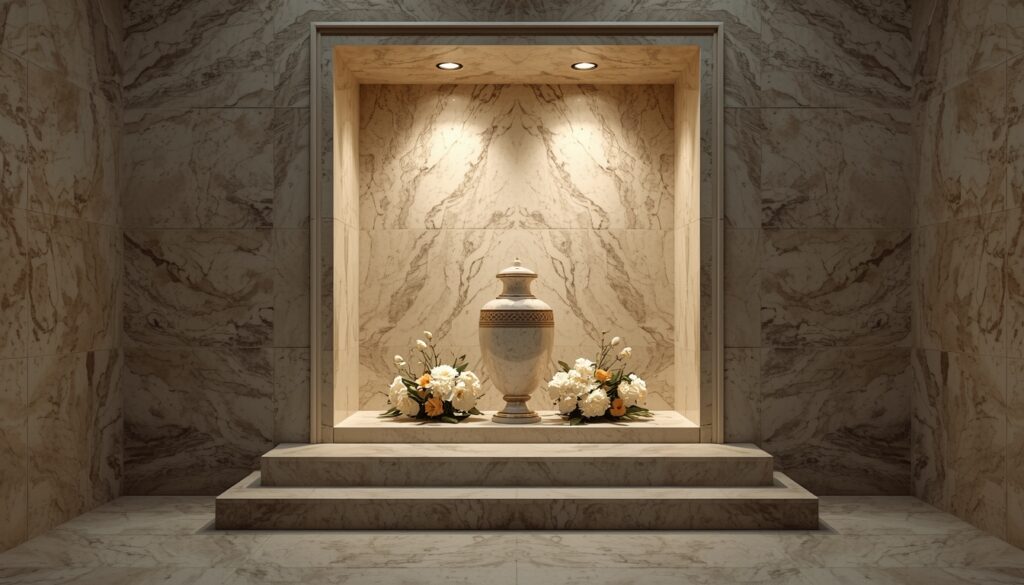
Cremation urns are typically used as a focus of a memorial service, just as a casket is the central altar piece in funerals of those who are to be buried rather than cremated. But after their use for public display at a funeral, cremation urns also have plenty of memorial uses. They can be placed on permanent display in a mausoleum’s niche. Most large cemeteries today also include a building or two that serve as a mausoleum filled with dozens or even hundreds of niches in which customers can host their loved one’s ashes. Likewise, cremation urns can become a family heirloom of sorts as part of a memorial display in a private home. As noted above, many families use keepsake cremation urns for this manner. In such cases, one regular sized cremation urn may, perhaps, be placed on display in a niche, and several other (or just one) keepsake urn(s) can be placed on display in family homes in various parts of a city, state, or even country. As the memorial products industry evolves to include more and more keepsake cremation urn choices, this is an increasingly popular use for cremation urns.
Cremation urns are also commonly used as part of a memorial display even when empty. It is quite common for families to receive a loved one’s ashes from a crematory facility in the urn the family (or even the deceased himself) has selected and then to scatter the remains over some special place (or perhaps places) as decided by the family or perhaps requested by the deceased. The empty (or maybe partially full) urn can then be placed on display as a permanent reminder of the deceased person’s life.
And, finally, a cremation urn can simply be buried in a traditional grave plot just as a casket is. With the advent of many new, sophisticated and stylish styles of cremation urns, this choice is becoming less and less popular. (Who, after all, wants to buy a fancy cremation urn only to bury it within a few days?) But still, it is a common thing to do. In many cases, in fact, frugal families will buy an inexpensive cremation urn – which can sell for as little as $100 – and bury it in a half of a standard sized grave plot. In many cases, this can turn out to be the least expensive, most economical, method of disposing of a cremation urn, and so, for that reason it is the practical choice for many families today.